Garage Door Opener Repair in Las Vegas
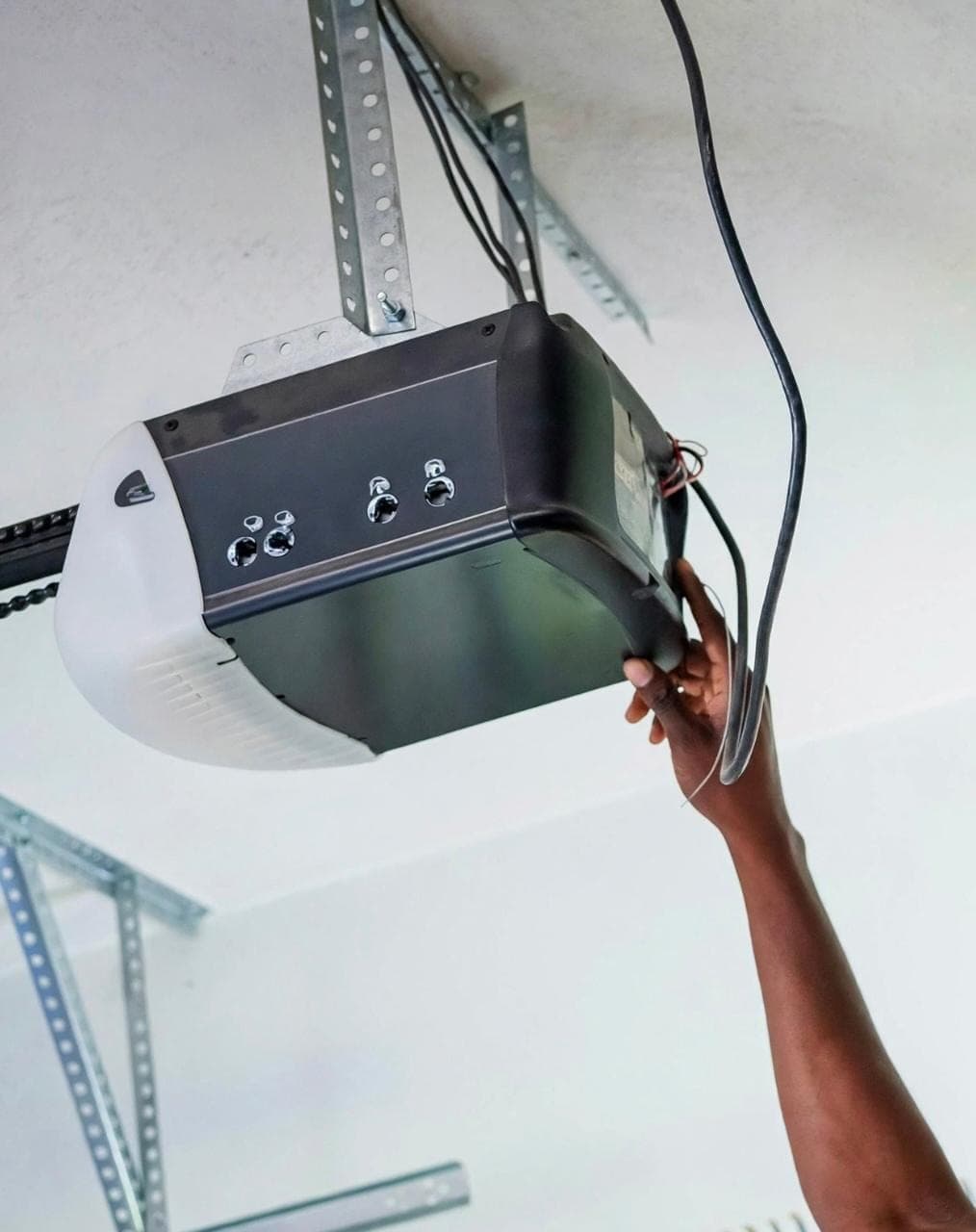
When an opener hums without moving the door, clicks and gives up, or dies completely, the first question is whether the opener is actually the problem — an opener straining against a broken spring or a binding door looks 'broken' but isn't. GRC Garage Doors diagnoses the whole system across the Las Vegas Valley, repairs the opener when repair makes sense, and tells you plainly when replacement is the better spend. Call 702-758-4397.
Signs you may need this service
- The motor hums or buzzes but the door doesn't move
- The trolley moves but the door stays down (often a stripped gear or disconnected trolley)
- The door reverses immediately after touching the floor
- It works from the wall button but not the remotes, or vice versa
- Grinding from the motor head
- The opener starts, moves a few inches, and stops
- Lights flash and the door refuses to close (usually the safety sensors)
Common causes
Stripped drive gear
The classic failure on chain-drive units, especially after the opener has been straining against an unbalanced door. You hear the motor run; nothing moves.
Worn trolley or carriage
The part that actually drags the door. Plastic trolleys wear out; sometimes the emergency release was simply left disengaged.
Safety sensor problems
Misaligned, dusty, or sun-blinded photo eyes are the #1 cause of a door that won't close. In Las Vegas, low winter sun shining straight into a sensor is a real and surprisingly common culprit.
Logic board or capacitor failure
Power surges — common during summer monsoon storms — take out boards and starting capacitors. A dead opener after a storm usually points here.
Travel and force settings drift
Settings that no longer match the door make it reverse at the floor or stop mid-travel. Often the door changed (new rollers, new spring), not the opener.
How we handle it
Test the door before the opener
We disconnect the opener and check the door's balance and roll by hand. An opener 'repair' on a door with a dying spring just kills the next opener too.
Diagnose the opener itself
Gears, trolley, capacitor, board, sensors, and settings — we identify the actual failed part rather than defaulting to 'you need a new unit.'
Repair or recommend honestly
Gears, trolleys, sensors, and remotes are economical repairs. A fried board on a 20-year-old builder unit usually isn't — we'll show you the math either way, including what a modern replacement adds (see opener installation).
Set, test, and verify safety functions
Force limits and travel are set to the door, and we verify both safety systems: photo-eye reversal and contact reversal on a 2x4 test block.
Repair or replace?
Worth repairing: openers under ~10–12 years with a single failed mechanical part. Worth replacing: openers without working safety sensors (pre-1993 units), chain units that predate rolling-code remotes, anything with a failed board out of warranty, and openers that will be outmatched by a heavier new door. Our opener installation page covers what modern LiftMaster units add — battery backup, smartphone control, and far quieter belt drives.
A word on safety
Two non-negotiables: a garage door opener must reverse when its photo-eye beam is broken and when the door touches an obstruction. If either test fails, the door is a hazard to kids and pets, and it should be fixed before the door is used normally. If your opener predates safety sensors entirely, replacement isn't an upsell — it's overdue.
Unplug the opener before anyone touches the trolley, chain, or gears, and never adjust the opener's force limit to 'push through' a binding door — that setting is a safety device, not a power dial.
What affects the price
We don’t publish one-size-fits-all prices because they’d be wrong as often as right. The price you’re quoted on site — before any work starts — depends on:
- Failed component (gear kit vs. trolley vs. capacitor vs. logic board)
- Opener age, brand, and parts availability
- Whether the door needs balancing or repair to stop the opener failing again
- Sensor or wiring replacement runs
Opener Repair — common questions
Why does my garage door close and then open again?
Either the safety sensors are misaligned/blocked (the opener light usually blinks) or the closing force/travel limit no longer matches the door — the opener touches the floor, thinks it hit something, and retreats. Both are quick fixes; both are also easy to mis-adjust in a way that defeats the safety system, so have it set properly.
The opener works but the door doesn't move. What is that?
Most often a stripped drive gear (you'll hear the motor run) or a trolley that's disengaged — check whether the red release cord was pulled. If the trolley is engaged and the motor runs without movement, it's gear/trolley repair territory.
Only one remote stopped working — opener problem?
Probably just the remote battery or programming. If all remotes fail but the wall button works, the opener's radio receiver or the remotes' programming is the issue — see our remotes and keypads service.
My opener died after a storm. Repairable?
Sometimes it's just the GFCI outlet or a surge-tripped board. Check whether the outlet needs resetting first. If the board is fried, we'll price a board (when available) against a modern replacement unit honestly.
Is a loud opener worth fixing?
If it's an older chain unit rattling the bedroom above the garage, the fix people are usually happiest with is a belt-drive replacement rather than chasing the noise part-by-part. If the noise is new, it may just be a worn part or the door itself — we'll tell you which.
Related services
Need opener repair in Las Vegas?
Call 702-758-4397 and describe the problem — we'll tell you honestly what it needs and what happens next.